





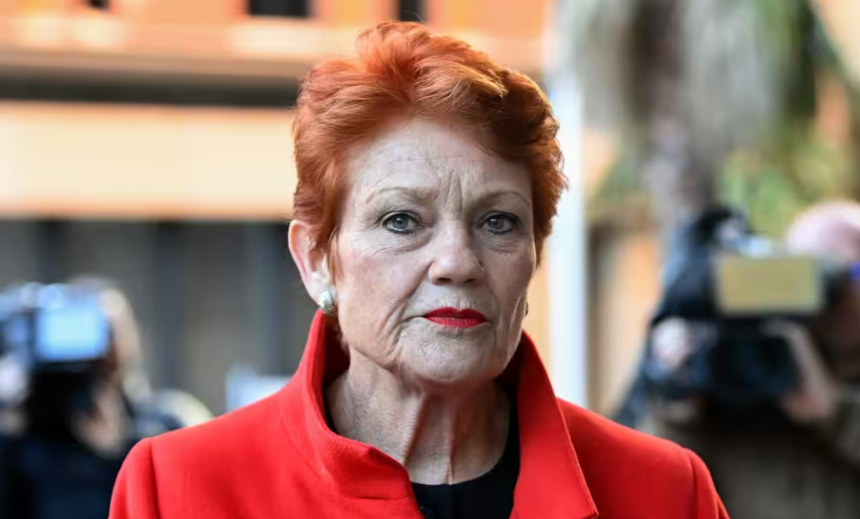
Pauline Hanson has been a defining and often controversial figure in Australian politics for nearly three decades. As the founder and leader of the One Nation party, she has consistently positioned herself as a representative of voters who feel marginalized by mainstream political institutions.
Born on May 27, 1954, in Brisbane, Queensland, Hanson’s early life was shaped by modest circumstances. Before entering politics, she worked in various jobs, including running a small business. Her background contributed to her political image as an outsider, someone not deeply rooted in the traditional structures of political power.
Hanson first rose to national prominence in 1996 when she was elected to the Australian House of Representatives as an independent candidate. Originally selected as a Liberal Party candidate, she was disendorsed prior to the election but retained enough public support to win her seat. Her maiden speech in parliament drew widespread attention and marked the beginning of her long-standing presence in Australian political debate.
Soon after, Hanson founded the One Nation party. The party’s platform focused on issues such as immigration policy, economic protectionism, national identity, and support for regional communities. These themes resonated with a segment of the electorate that felt left behind by globalization and economic change.
Throughout her political career, Hanson has experienced both significant successes and setbacks. One Nation achieved notable electoral results in its early years, though internal divisions and legal challenges affected its stability. Despite these difficulties, Hanson remained politically active and eventually returned to parliament as a senator, demonstrating a remarkable degree of resilience.
Hanson’s political style is often described as direct and unapologetic. She has built a strong base of supporters who view her as a voice for ordinary Australians and an advocate for issues they believe are overlooked by major parties. At the same time, her statements and policy positions have generated ongoing criticism and debate, both domestically and internationally.
In recent years, Hanson has continued to play a role in shaping discussions around national policy, particularly in areas such as immigration, economic security, and cultural identity. Her longevity in politics highlights her ability to adapt to changing political conditions while maintaining a consistent core message.
Pauline Hanson’s career illustrates the complexities of populist politics in modern democracies. Whether viewed as a champion of underrepresented voters or a controversial figure challenging established norms, her influence on Australian political discourse remains significant.